
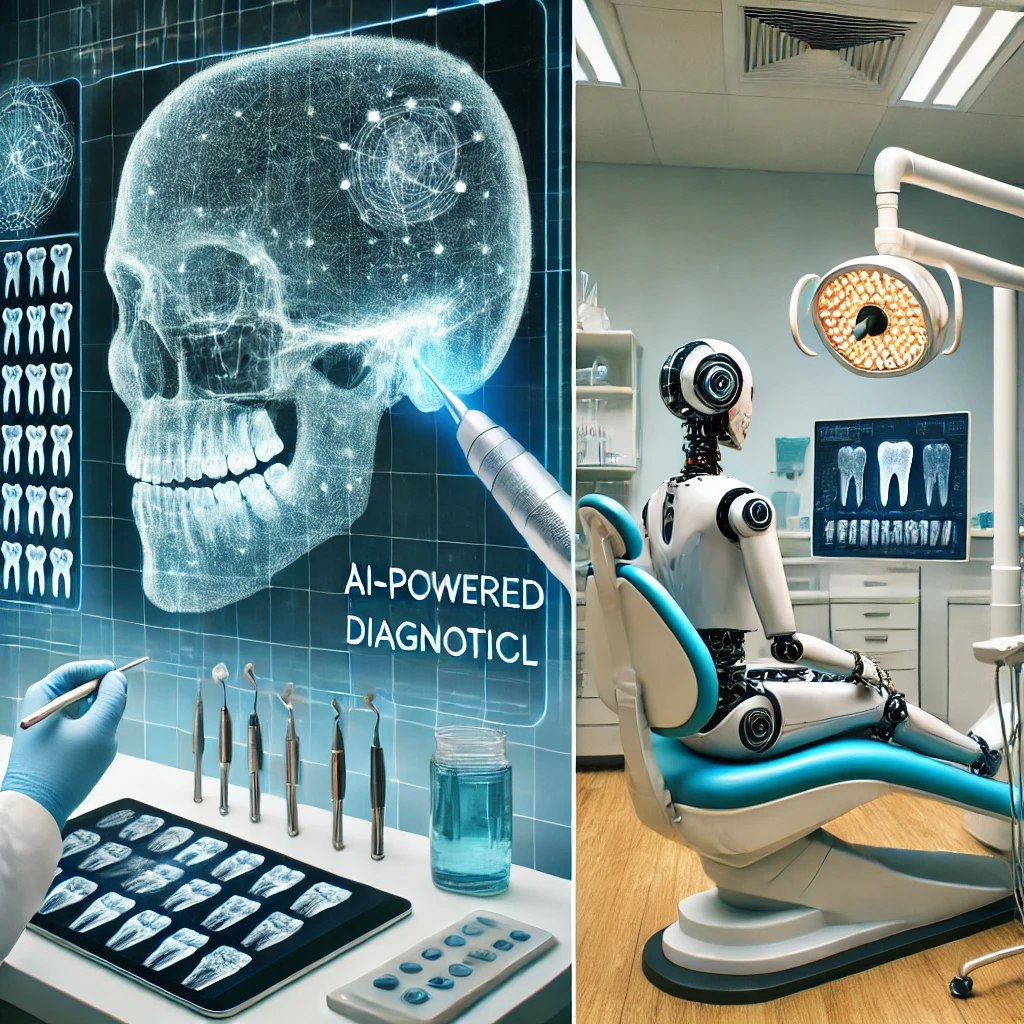
The fusion of artificial intelligence (AI) with oral health care is not just a distant dream—it’s happening right now, and it’s set to revolutionize how we take care of our teeth and gums. Imagine a world where your dentist can spot a cavity before it even forms, or where robots assist in delicate oral surgeries with unmatched precision. This isn’t science fiction; it’s the future of dentistry, and it’s closer than you think.
- AI as a Game-Changer in Diagnostics
Remember the days when visiting the dentist meant nervously waiting for the results of an X-ray? AI is changing that by offering tools that can analyze dental images faster and more accurately than ever before. These AI systems use advanced algorithms to compare your X-rays with thousands of others, identifying even the smallest signs of issues like cavities, gum disease, or even oral cancers. This not only speeds up diagnosis but ensures that you get the right treatment before problems escalate. In fact, a recent study published in the Journal of Dental Research found that AI could detect cavities with an accuracy rate of over 90%, surpassing traditional methods . - Tailoring Treatment Just for You
We’re all unique, and so are our dental needs. AI is helping dentists develop personalized treatment plans by analyzing a vast array of data—from your medical history to your daily habits. This means your dentist can craft a treatment plan that’s just right for you, potentially improving outcomes and speeding up recovery. For example, AI can predict how well you’ll respond to certain treatments based on your genetic profile, a development that was highlighted in a recent article in The Lancet Digital Health . - Precision Surgery with a Robotic Touch
Surgical procedures are always nerve-wracking, but AI-driven robotics is making them safer and more precise. Imagine a robot assisting your dentist in placing an implant with pinpoint accuracy. These AI-guided robots can perform complex tasks with minimal invasiveness, which means less pain and quicker recovery times for patients. In a case study published by Oral Surgery, Oral Medicine, Oral Pathology, and Oral Radiology, robotic systems reduced surgical complications by 30% . - AI-Driven Research for Better Health
Behind the scenes, AI is working tirelessly to crack the code of oral diseases. Researchers are using AI to sift through mountains of data, uncovering new insights into the causes and progression of conditions like periodontal disease. This could lead to breakthroughs in prevention and treatment, ultimately helping more people maintain a healthy smile. According to a recent report in Nature Medicine, AI has already identified previously unknown risk factors for gum disease by analyzing patient data at a scale never before possible . - Virtual Assistants in Your Dental Office
AI isn’t just about high-tech tools; it’s also about making your visit to the dentist more pleasant. Virtual dental assistants are now helping with everything from scheduling appointments to answering your questions about post-treatment care. These AI-powered assistants free up your dentist and their team to focus on what really matters—taking care of you. According to a survey by the American Dental Association, practices that implemented AI-driven virtual assistants saw a 20% increase in patient satisfaction . - Bringing Dental Care to You with Tele-dentistry
Access to dental care has always been a challenge in rural or underserved areas, but AI is helping bridge that gap through tele-dentistry. AI algorithms can analyze photos or videos of your teeth taken on your smartphone, providing preliminary assessments that help dentists decide on the next steps. This is especially valuable in areas where a trip to the dentist might involve hours of travel. A pilot program featured in The Journal of Telemedicine and Telecare showed that tele-dentistry combined with AI reduced the need for in-person